Morsel Conflict in a Cat – Germanic New Medicine Testimonial
These-Real Life Testimonials were written by people who apply German New Medicine in their daily lives.
497
Morsel Conflict in a Cat: How a Visible Food Bowl Solved Chronic Vomiting and Anxiety
A friend from the Germanische Heilkunde writes:
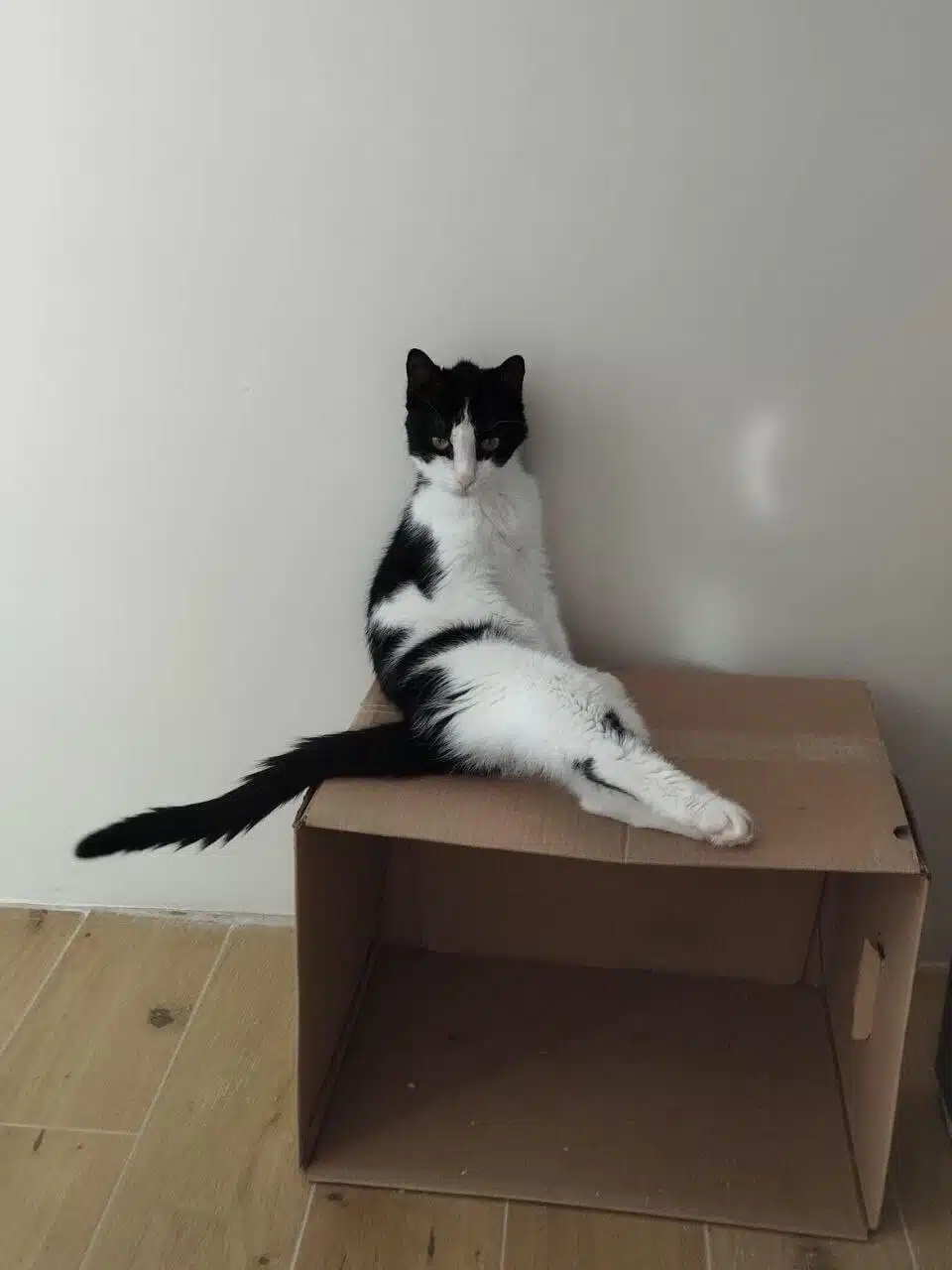
Cat Gosha – morsel conflict
The cat Gosha is 15 years old. He lives with loving owners who care for him very much but do not know Germanische Heilkunde.
Recently, the owners had to urgently travel to another country for 2 weeks and asked me to live at their place and look after the cat. According to them, the cat was very non-confrontational, only needing to be fed and have his litter box cleaned occasionally. I had seen the cat a couple of times; he seemed friendly to me but very thin.
On the morning of the departure day, the owners gave me feeding instructions for the cat and warned that he constantly yowls: when he goes to the toilet, when he asks for food, or when doors are closed on him. That was no surprise. The real stress for me was the news that the cat regularly vomits—the owners had not warned me about this beforehand and now simply presented it as a fact. To my question of when this happens, the owner explained in detail that it usually happens if the cat was hungry and then ate quickly, and sometimes it happens “just depending on his mood.”
The cat gets the best wet food several times a day, some sour cream and boiled chicken breast, and dry food is always available to him (which he practically doesn’t eat).
I petted the cat—under his fur he was so skinny, just “skin and bones”—and asked the owners: “Why is he so thin?” They answered me: “That’s normal, he will always be like this now.”
When the owners left, I read the instructions carefully. The cat needed to be fed every two hours, except at night, but there was a point: if the cat doesn’t finish his food, put the bowl in the refrigerator.
I already understood that such thinness could be a sign of a prolonged, exhausting conflict in the yellow group. And now I knew that most likely, it was a morsel-conflict. The cat’s owners believe in the germ theory and that food must constantly be put in the refrigerator because it won’t spoil there.
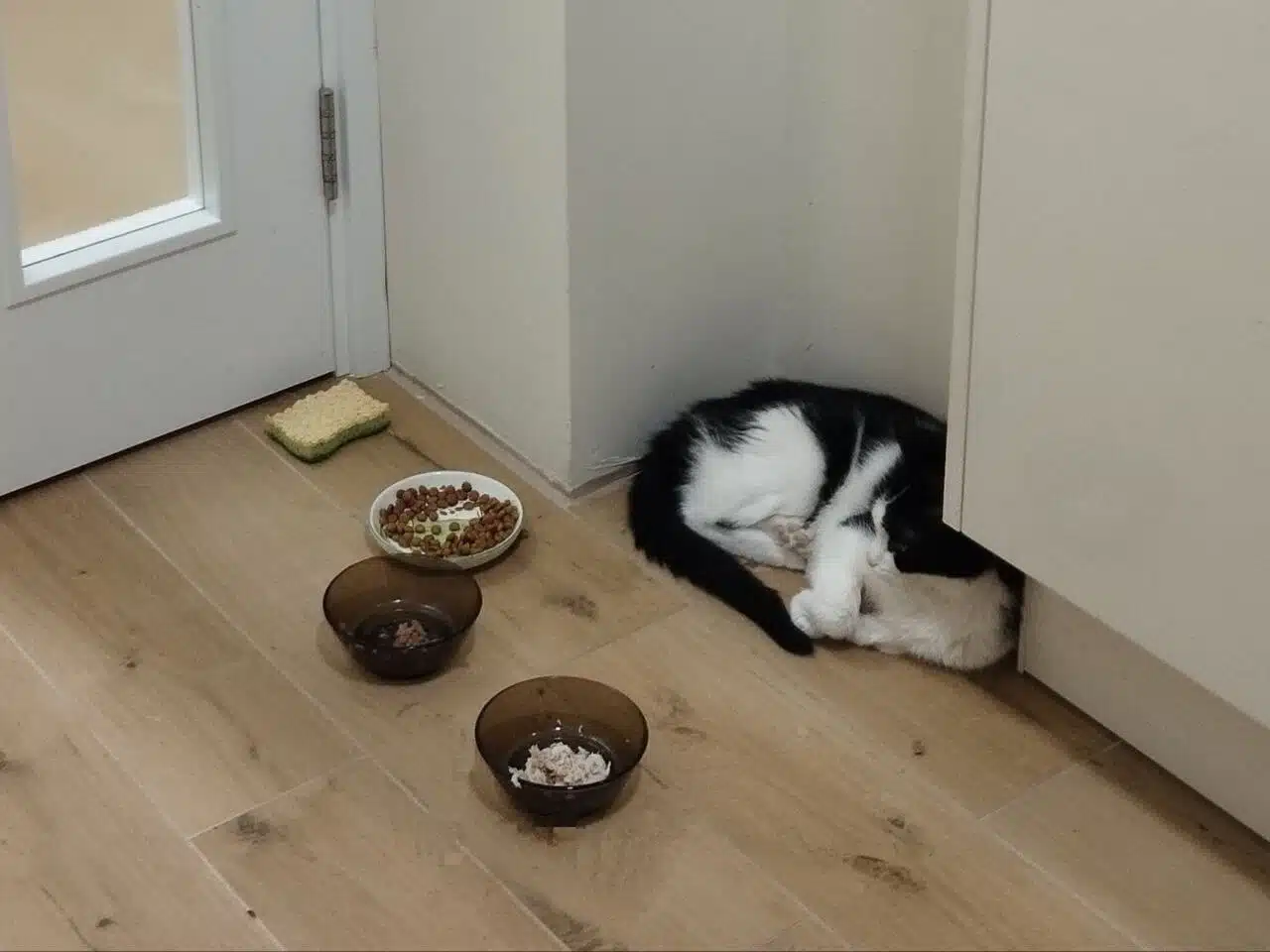
I imagined how the cat might feel, having his bowl taken away from under his nose, time after time, day after day, and every night. And I decided I wouldn’t do that. Now the cat always had the desired “morsel” in sight, even when he was full.
The cat really did yowl a lot, especially when going to the toilet or when demanding fresh water.
After a couple of days in the morning, I saw signs of the resolution of the morsel conflict: diarrhea and vomiting. The discharge was foamy, watery, and smelled very strongly.
The kitty became very lethargic, almost stopped eating, coming to me; he only lay in a secluded spot all day and slept. When he walked, he swayed from weakness. And he suddenly stopped yowling, became very quiet.
Another couple of days later, he seemed to get a little better; the diarrhea and vomiting stopped. He was active again, started eating a little more, but also started making sounds, and one night he constantly yowled very loudly—especially when going to the toilet.
For the next day and a half, he periodically had loose stools, urges to vomit, and his appetite was unstable.
Finally, on the third day, for the first time in a long while, he was very hungry and started actively eating, constantly asking for more. It seemed he had gotten a little better.
I added food for him little by little.
But after 3 hours, vomiting happened again. This time the discharge wasn’t foamy, but simply all the food came out practically undigested.
Gosha became quiet again, didn’t yowl.
He slept in his secluded corner almost until evening. And only by night did he finally come out to me, calmed down, softened, and a little hungry.
I started petting him; for the first time, he presented his belly, pressed his muzzle into my palm, and purred contentedly.
Since then, his digestion completely normalized. The nervousness and intrusive yowling completely disappeared. The owners, whom he hadn’t let sleep at night, couldn’t believe me. With me, the cat behaved quietly and didn’t wake me up at all.
Instead of screaming in the early hours, he calmly sat by the bowl and waited for me to get up and put food for him.
We established contact without words—he would simply come to me and ask me to pet his belly. Moreover, his conflict in the kidney tubes resolved because for the next few days, the urine smelled so strongly it was almost impossible to enter the toilet. But he ate now with double the appetite! I continued to pet him, feed him on demand, not according to instructions, and always leave the bowl in sight.
Cat Gosha – Always keep the morsel in sight
The owners were returning at night, and I warned them I would leave his bowl on the floor. They were very surprised but didn’t argue. And in the morning they said they couldn’t recognize him: for the first time in many years, he didn’t wake them with night yowls, didn’t demand food, didn’t scream, and wasn’t nervous. I said the only thing I did was stop hiding the bowl. Knowing these people believe in scientists, I said: “An animal behavior specialist helped me; she convinced me that the cat absolutely needs to see the bowl with food, then he won’t have stress and won’t have an upset stomach. And as you see, it really works!”
Yesterday I said goodbye to Gosha and returned home. I really hope that love for the cat will conquer belief in “bad microbes,” and the owners will leave food for him and stop hiding the bowl in the refrigerator. And Gosha will finally gain a little weight and will continue to be calm and cheerful.
Commentary by Natalie:
Thank you for describing such a wonderful animal example!
Wonderful, as the Biological Laws help us think biologically and take such decisions.
Our friend made the right decisions, and as you friends read, it’s not easy and the symptoms of the healing phase are also not simple. When you don’t know that it will be like this, it creates fear and panic in a person. And the kitty simply waited in his corner, his little spot where it was comfortable for him.
We see a story clearly involving relapses of the small intestine. Elderly people, like elderly animals, react more often and faster to various conflicts, and each needs the body’s resources for the healing phase.
Of course, the kitty yowled when he was in pain. With frequent relapses, it was sometimes constipation, sometimes diarrhea, sometimes vomiting. With constipation, it was painful for him to go for the cat litter box. And also in the healing phase with diarrhea, peristalsis does its thing and causes strong cramps. Each of us has been through this at least once and can imagine it.
How well our friend was able to explain to the friends about animal behavior. We hope that seeing the actual difference in the change of the cat’s essence, as with relapses in the upper and lower sections of the small intestine he was still in consternation, as Dr. Hamer already writes in his book “Meine Studentenmädchen”.
And our friend became a cat charmer 🙂 Or maybe he just needed more female affection? Bravo; You did everything right!
We use cookies on our website to give you the most relevant experience by remembering your preferences and repeat visits. By clicking “Accept All”, you consent to the use of ALL the cookies. However, you may visit "Cookie Settings" to provide a controlled consent.
This website uses cookies to improve your experience while you navigate through the website. Out of these, the cookies that are categorized as necessary are stored on your browser as they are essential for the working of basic functionalities of the website. We also use third-party cookies that help us analyze and understand how you use this website. These cookies will be stored in your browser only with your consent. You also have the option to opt-out of these cookies. But opting out of some of these cookies may affect your browsing experience.
Necessary cookies are absolutely essential for the website to function properly. These cookies ensure basic functionalities and security features of the website, anonymously.
Cookie
Duration
Description
cookielawinfo-checkbox-analytics
11 months
This cookie is set by GDPR Cookie Consent plugin. The cookie is used to store the user consent for the cookies in the category "Analytics".
cookielawinfo-checkbox-functional
11 months
The cookie is set by GDPR cookie consent to record the user consent for the cookies in the category "Functional".
cookielawinfo-checkbox-necessary
11 months
This cookie is set by GDPR Cookie Consent plugin. The cookies is used to store the user consent for the cookies in the category "Necessary".
cookielawinfo-checkbox-others
11 months
This cookie is set by GDPR Cookie Consent plugin. The cookie is used to store the user consent for the cookies in the category "Other.
cookielawinfo-checkbox-performance
11 months
This cookie is set by GDPR Cookie Consent plugin. The cookie is used to store the user consent for the cookies in the category "Performance".
viewed_cookie_policy
11 months
The cookie is set by the GDPR Cookie Consent plugin and is used to store whether or not user has consented to the use of cookies. It does not store any personal data.
Functional cookies help to perform certain functionalities like sharing the content of the website on social media platforms, collect feedbacks, and other third-party features.
Performance cookies are used to understand and analyze the key performance indexes of the website which helps in delivering a better user experience for the visitors.
Analytical cookies are used to understand how visitors interact with the website. These cookies help provide information on metrics the number of visitors, bounce rate, traffic source, etc.
Advertisement cookies are used to provide visitors with relevant ads and marketing campaigns. These cookies track visitors across websites and collect information to provide customized ads.